
Large language models had the internet. Robots do not.
Text models could learn from trillions of words already produced by humans. A general-purpose robot needs examples of perception, movement, contact and consequence. There is no equivalent public archive containing every useful way to open a drawer, route a cable, fold fabric or navigate a crowded warehouse.
Robot data has to be created.
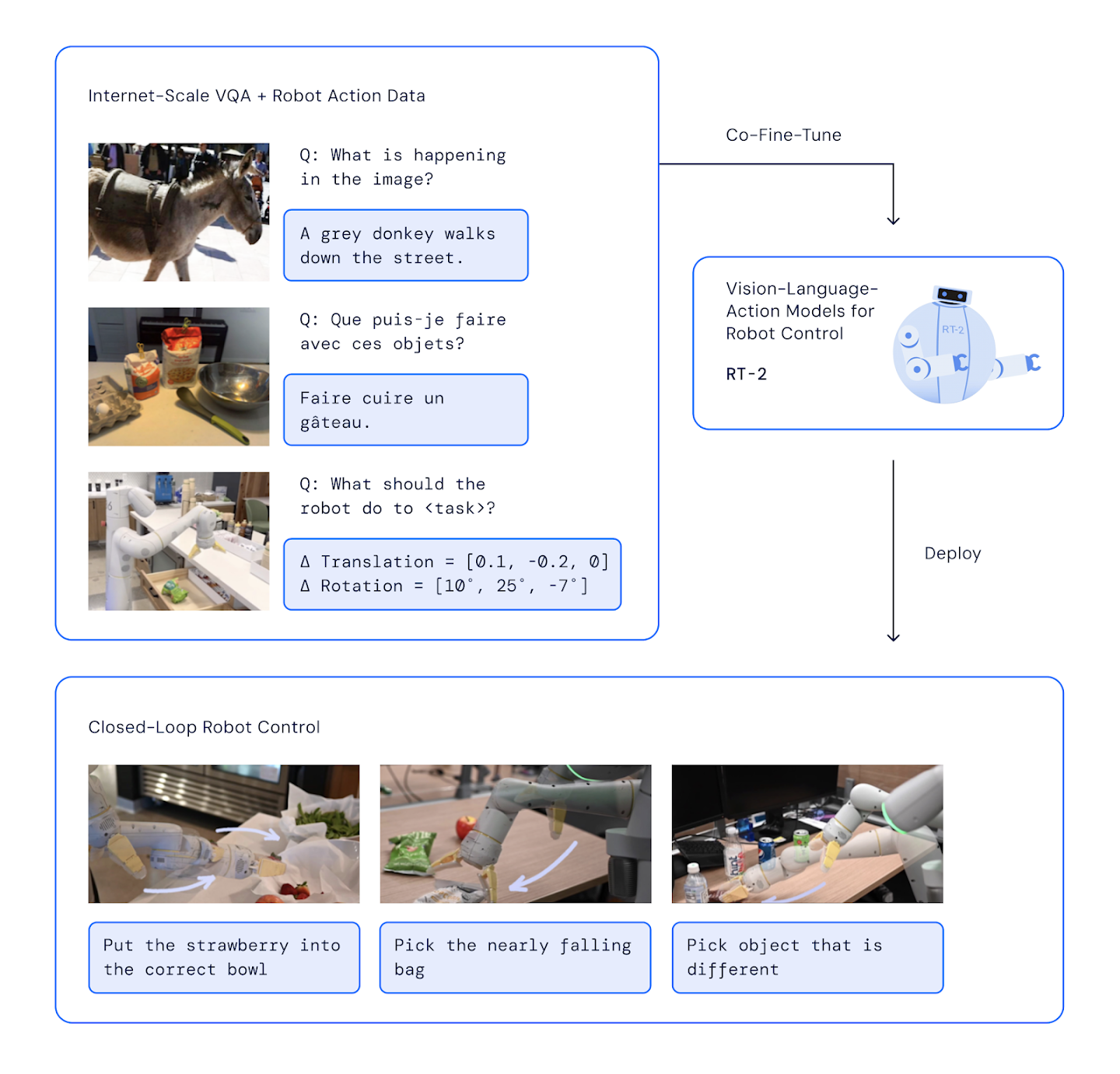
That is why simulation is moving from nice-to-have visualization into core AI infrastructure.
A robot needs three computers.
The first trains the brain, using accelerated-computing clusters.
The second simulates worlds where the robot can practice.
The third sits inside the machine, running perception and control in real time.
NVIDIA describes this as train, simulate, act. Its stack maps DGX systems to training, Omniverse and Cosmos to simulation, and Jetson hardware to deployment on the robot.
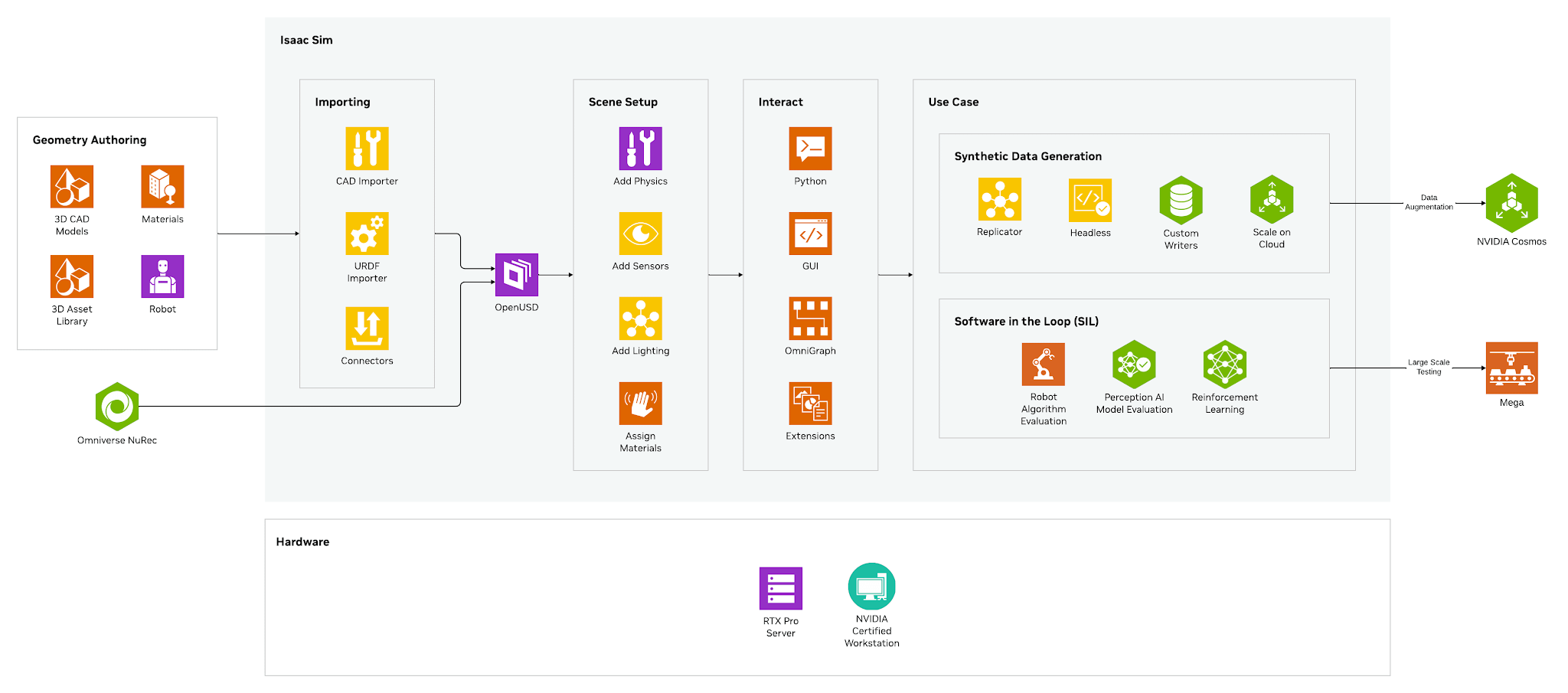
The important idea is not the product list. It is the feedback loop.
A robot practices in a virtual environment. The system generates synthetic scenarios, including rare and dangerous ones. Policies are tested, failures are discovered, and the model improves before touching a real machine. Real-world experience then flows back into the simulation.
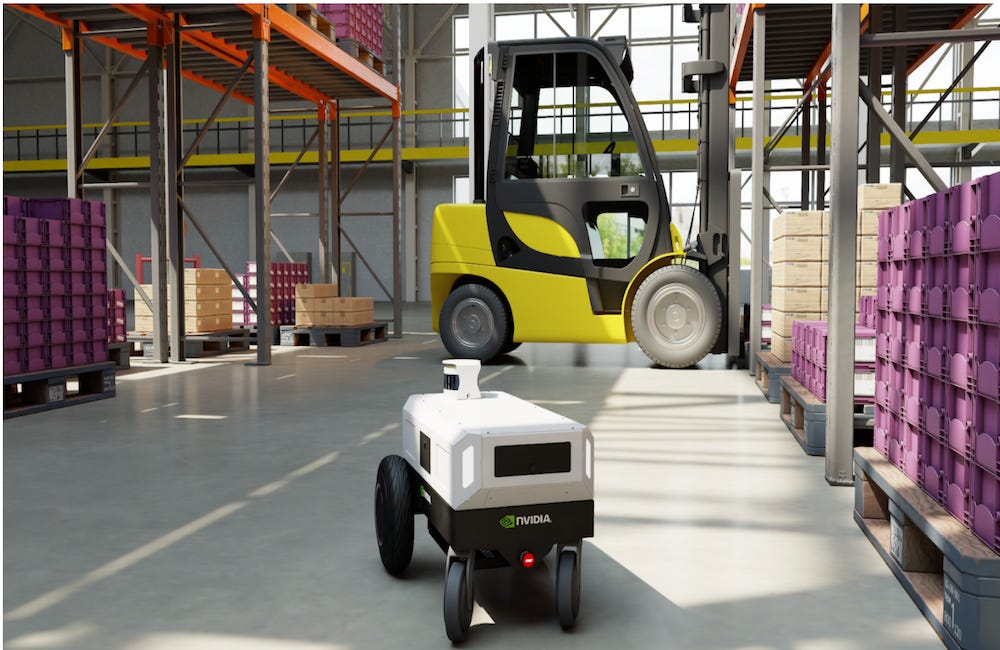
The virtual world becomes a data factory.
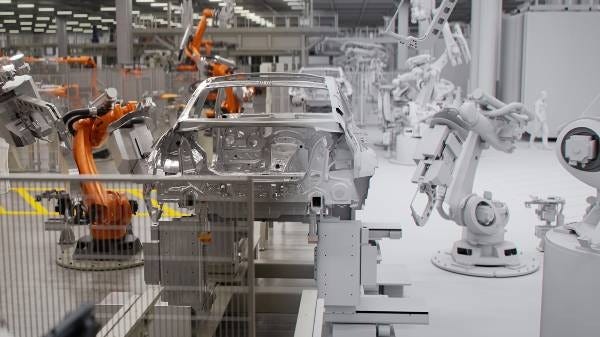
Omniverse is often described as a platform for digital twins. The useful distinction is that a serious digital twin is not a pretty 3D model. It is a simulation where geometry, materials, physics, sensors and behavior are represented well enough to test decisions.
OpenUSD provides a shared language for those worlds. Pixar created Universal Scene Description so teams could work on complex films without overwriting each other. In an industrial context, it lets architects, engineers and robotics teams contribute different layers to the same environment.
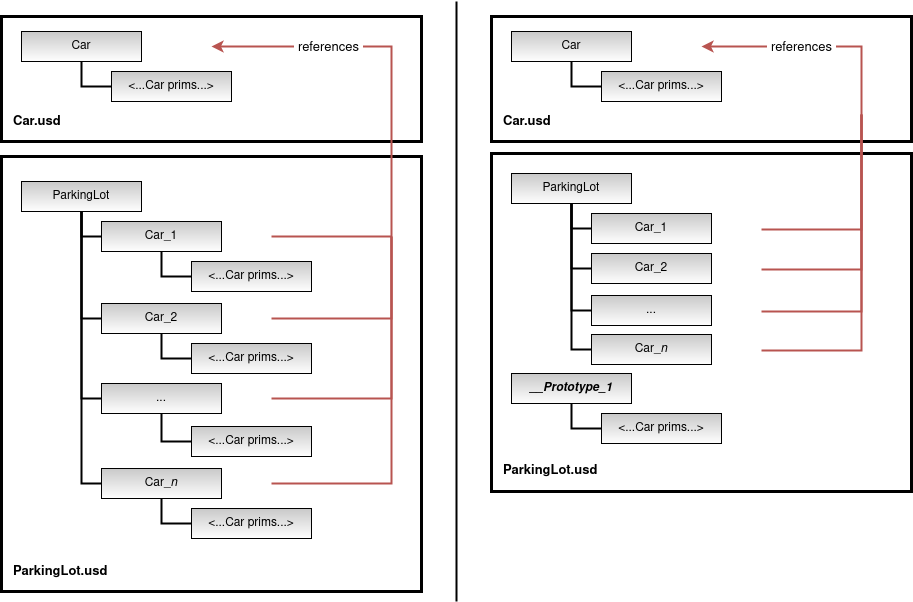
A SimReady asset goes beyond appearance. A simulated transformer, conveyor or robot arm needs mass, friction, joints, thermal behavior, sensor properties and semantic labels. Otherwise it is a mannequin, not a crash-test dummy.
This matters because physical AI fails in physical ways.
A language model can hallucinate a sentence. A robot can drop a component, collide with a person or damage a production line.
Simulation gives machines a childhood: a contained period of trial, error and consequence before adult responsibility.
It also addresses the sim-to-real gap - the stubborn difference between a clean virtual world and messy reality. Real floors have variable friction. Cables tangle. Lighting changes. Objects deform. Sensors drift.
One response is domain randomization. Instead of building one perfect simulation, engineers vary lighting, textures, weights, camera positions and friction. The robot learns a range of worlds, not one ideal one.
The goal is not a perfect copy of reality. It is a policy robust enough to survive reality’s variation.
World foundation models add another layer. A language model predicts what comes next in a sequence of tokens. A world model predicts what may happen next in a scene. If a robot pushes a cup, does it slide, tip or fall? If a pedestrian steps toward the curb, what trajectories become possible?
That is the bridge from language to action.
Robotics was once judged by the demo: can the machine walk, grasp or complete a scripted task? Hardware specifications and task success in controlled settings were enough to attract attention. They are not enough to run a fleet in the real world.
Physical AI shifts the operating metrics toward intervention rate, failure severity, edge-case coverage, sim-to-real transfer, uptime, cycle time and cost per successful task. Simulation matters because it lets teams expand the test surface and fail cheaply before failures reach people, equipment or production lines. Real-world deployment then feeds new data back into the simulator and model.
The strategic moat is therefore not the robot body or the foundation model alone. It is the speed and discipline of the learning loop: simulate, evaluate, deploy, observe and improve. In software, a bug can be rolled back. In physical AI, the winning company is the one that learns fast without making reality absorb the failure.
The physical-AI moat may not be the robot. It may be the simulation and data engine that teaches the robot what not to do.